What is the difference between goals, strategies, and tactics?
Goals have always been the motivation of planning for your future, but what are goals in terms of marketing and how do they differentiate from strategies and tactics? Goals are defined as a primary outcome. Strategies are the marketing goals and objectives combined as an overall comprehensive plan. The marketing strategy is the foundation in which the full marketing plan is built upon. In order to create a successful marketing strategy you must “research and know.” Researching consist on understanding almost everything you need know about your competitors and target market and consumers. With this type of knowledge and research you can build a strong marketing plan. Now you can get tactical. Tactics in marketing are what carries out the strategic marketing plan. Goals, objectives, strategies, and tactics build upon each other to fullfill the marketing purpose.
What is the importance of setting SMART goals when creating a marketing campaign? What questions should be considered?
Are you thinking S.M.A.R.T when creating your marketing campaign or just being creative? What are SMART goals and how can it help make your marketing campaign successful. SMART is an acronym for Specific, Measurable, Action-Oriented, Realistic, and Timed. Let’s define each letter down to layman’s terms. So S is for specific which means your goal should be clear, focused and precise. Don’t try to implement twenty ideas and/or objectives in one goal because it can cause a great deal of confusion as well prolonging the success of your goal. M is for Measurable meaning find a way to measure the content . Putting concrete numbers can keep you and your staff focused on the goal . A is for Action-Oriented meaning “can this goal be reached?” don’t make your goal unattainable. “Don’t despise the small beginnings.” (Zechariah 4:10) Set your goal high enough that it can be reached. R is for Realistic meaning think SMART. Plan for potential losses, errors, mistakes..plan to fail in order to succeed. Quite contradictory, right? Meaning research and gain knowledge in your industry in order to know what you could potentially face. Finally, T is for Time meaning set a time frame in which you want to complete your main goal. Give yourself a time frame that will gain you success not your downfall. In all of this ask yourself the who, what, when , and how !?! Who are your competitors and target audience? What is the lifestyle of your target audience? Why would people buy my product? How can my business distinguish itself from my competitors? These are a few questions that make you think SMART!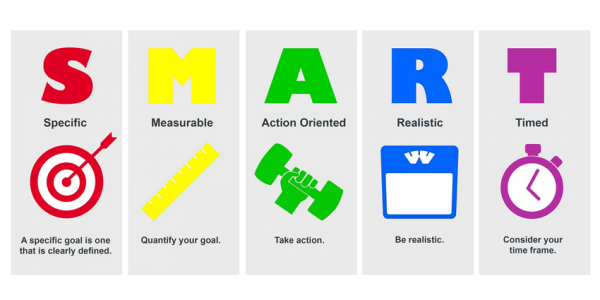
Provide examples to portray how marketing tactics align to strategies in order to support set goals.
As I mentioned earlier goals, objectives, strategies, and tactics build upon each other to fullfill the marketing purpose. With this being said a prime example on how marketing tactics align with strategies can be explained through my own personal marketing experience. I wanted to be an Independent Luxury Stylist with J. Hilburn Men’s Clothier. My main goals were to generate an extra $2000 in income and gain more knowledge in luxury brands. As well as build a clintele. In order to make these goal realistic and attainable I needed a strategy. First I had to understand the J. Hilburn man his specific psychographics as well as the demographics . The strategies and tactics I choose to do were passing out business cards, passing out the J. Hilburn Spring Collection Catalogs, sending emails, and things of that nature. The most successful tactics for J. Hilburn were exhibiting in trade shows as well as fashion shows. With mentoring from a top luxury stylist with J.Hilburn I was taught that the goal is to gain at aleast twelve clients in which you can build rapport with and who will be willing to buy at least two shirts, pants, and/or suit at $500. In order for strategies and tactics to become visible you must first have the vision written out. ” Write the vision and make it plain on tablets… ” (Habakkuk 2:2)
How can you ensure that your SMART goals are met using key performance indicators (KPIs)? Explain using examples to support your rationale
I believe that in order to be successful in any area of your life you must create and/or have strong foundation. Once your foundation is is solid you can build upon it. When creating your SMART goals it is important to have Key Performance Indicators (KPIs) because they help measure the level of success a business is achieving in their business goals and objectives. KPIs helps businesses goals not tarry and/or vanish. An example best given to me is when I recieved a brief mentoring from a jewelry store owner who was going out of business. What she said was, “Make sure you have a successful marketing plan.” She planned for inventory, but did not plan for her location. Here location and marketing are what caused her business to be closed. If her marketing plan was linked with KPIs her business could have had a more strategic goal that would have opened a door for wiser decision making for her business. KPIs help businesses to stay on track with every aspect of their SMART goals. Plan SMART and reap the Harvest!
References:
“How to Set SMART Goals for Your Digital Marketing Techniques.” DigPro, 8 Mar. 2019, https://digpro.qsigroup.com/2019/02/smart-goals-digital-marketing/.
CoSchedule. “Marketing Goals: How To Set SMART Goals & Achieve Objectives.” CoSchedule Blog, https://coschedule.com/marketing-strategy/marketing-goals/.
GhanbariFollowCBAP®, Meysam, et al. “Business Goals vs. Objectives vs. Strategies vs. Tactics.” LinkedIn, https://www.linkedin.com/pulse/20140616055721-142774715-business-goals-vs-objectives-vs-strategies-vs-tactics.
 Anointed Marketing by Latrisha